Apify's free tier in 2026: is it enough to scrape?
For most of the Apify Store, yes. About 72% of actors bill pay-per-event, so a $5 monthly credit covers a real one-off job. The 23% on flat-rate rental burn it instantly, but Apify retires rental on 1 October 2026, after which it covers nearly the whole catalogue.
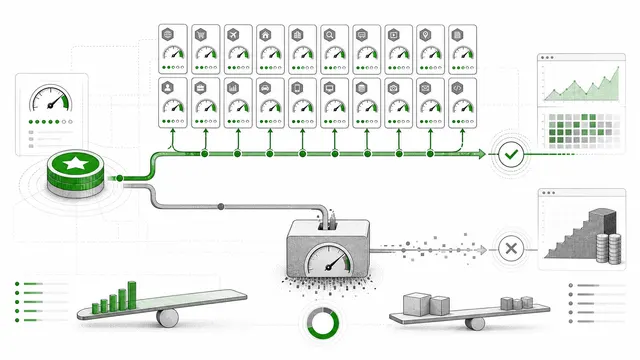

Is Apify’s free tier enough to run a real scraping job? For most of the Apify Store the answer is yes, and from 1 October 2026 it will be yes for almost all of it. What decides the question is not the size of the free credit — it is the pricing model attached to each actor, and the Store has shifted onto the one model that makes a small credit go a long way.
What the free tier actually gives you
Apify’s free plan is permanent and needs no credit card. It grants $5 of prepaid platform usage each billing cycle, metered at $0.20 per compute unit, with up to 8 GB of memory per actor, 25 concurrent runs and five datacenter proxies. Unused credit does not roll over, and runs stop the moment the $5 is spent. The current terms sit on Apify’s pricing page.
Five dollars sounds like nothing. Whether it is depends entirely on how the actor you pick charges you.
The model that decides it — pay-per-event
Across the 4,469 Store actors Signal Census tracked at the end of May 2026, 71.9% bill on a pay-per-event basis: you pay for discrete actions — a result returned, a run started — rather than a flat subscription. A further 5.5% are free beyond platform compute. Only 22.6% charge a fixed monthly rent.
Usage-based pricing is what makes the free tier usable. A pay-per-event actor lets you spend a few cents, read the output and stop, so $5 buys a genuine one-off job — a few thousand records from a typical scraper before the credit runs out. The catch sits one layer down: many Store actors stack their own per-result or per-event fee on top of Apify’s compute charge, so the meter can move faster than the compute chart suggests. The free tier is enough to test almost anything and to finish plenty of small jobs. It is not built for sustained collection.
Where the free tier breaks — and why that’s ending
The blind spot is the rental shelf. A flat-rate actor charges a fixed monthly fee that, in most cases, exceeds the entire $5 credit on its own — so it swallows the budget before you collect a row. For the 22.6% of the catalogue still priced this way, the free tier is effectively closed.
That gap is closing on a fixed schedule. Apify is retiring the rental model: since 1 April 2026 no new rental actors may be published or repriced, and on 1 October 2026 every remaining rental actor is migrated to pay-per-usage, where the user covers only platform cost with no developer rent. On that date roughly a fifth of the Store moves from “needs a paid plan” to “runnable on $5”, and the free tier’s last structural blind spot disappears.
So, is it enough?
For testing, prototyping and small pay-per-event jobs, the free $5 is genuinely enough — and from then it will be enough across nearly the whole Store. For anything sustained, such as daily runs or large extractions, it is not, and the cheaper honest answer is Apify’s Creator Plan, which currently hands developers $500 of usage for six months, or the $29 Starter tier. Either way, start on the free tier and let the meter tell you which job you actually have.
The free tier was never the real constraint. The pricing model was — and Apify is about to remove it.