The MCP Server Marketplace: 17,000 Servers, ~3% Monetized
Smithery, MCP Hub, and Anthropic's registry index 17,000+ servers in mid-2026. Only 3-6% (500-1,000) carry monetization. Rest are free OSS, internal, or experimental. Apify's MCP with x402+Skyfire rails is the largest paid commercial MCP.
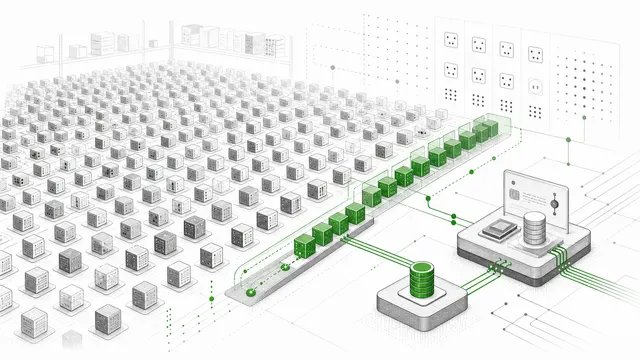

The Model Context Protocol ecosystem has produced more than 17,000 indexed servers since launch in November 2024. The headline number is impressive. The monetization-rate number is smaller and more informative: only 3-6% of indexed MCP servers carry visible pricing. The rest are open-source, internal-only, or experimental — built because the protocol made it easy, not because there is a revenue model behind them.
The monetization gap is the central commercial question for the MCP ecosystem in 2026-2027. Apify and Bright Data have shown that paid MCP servers are technically possible and operationally manageable. What is not yet visible at scale is a broad marketplace where independent MCP-server publishers earn meaningful revenue from agent-driven traffic.
The 17,000-server breakdown
The three major MCP registries — Smithery, MCP Hub, and Anthropic’s official mcp-servers repository — index overlapping but distinct subsets. The combined unique server count by mid-2026 is roughly:
| Server type | Approximate count | Share | Monetization model |
|---|---|---|---|
| Open-source community tools | 11,000-13,000 | None (free, MIT/Apache licensed) | |
| Vendor MCP wrappers (proprietary product, free MCP) | 2,500-3,500 | Indirect (drives product adoption) | |
| Internal / enterprise MCPs | 1,500-2,500 | None (private deployment) | |
| Paid commercial MCPs | 500-1,000 | Direct (pay-per-call, subscription, or x402 rails) | |
| Experimental / abandoned | residual | residual | None |
The bulk of the 17,000 is community-built open-source servers — wrappers around public APIs, utility tools, integration glue. These are the equivalent of the early-2020s VS Code extension ecosystem: high volume, mostly free, important for ecosystem health but not directly monetized.
The 500-1,000 paid commercial MCPs are the part of the ecosystem with actual revenue flowing through it. Most of those are produced by larger SaaS vendors that expose their existing paid product via MCP (Stripe MCP, Notion MCP, Linear MCP). A smaller subset is purpose-built paid MCPs — scraping infrastructure, data products, specialized agent tools.
Where the commercial activity sits
Three concentration points in the paid MCP segment.
Scraping infrastructure leads. Apify, Bright Data, Firecrawl, ScrapingBee, ZenRows — every serious scraping vendor now operates a paid MCP server. The unit economics work because scraping APIs were already priced per-call before MCP, so the protocol just adds a new distribution channel without changing the pricing model. Apify’s x402 + Skyfire payment rails make it the most agent-friendly of these — an LLM agent can pay for actor runs without creating an account.
Vertical SaaS exposed via MCP. Companies with existing per-seat or per-call SaaS products have shipped MCP wrappers to capture agent-driven traffic. Salesforce, HubSpot, Notion, Linear, GitHub — all have MCP integration with revenue routed through existing product pricing. The MCP layer is distribution, not direct monetization.
Niche commercial MCPs. A small but growing tier of purpose-built paid MCPs — financial data, scientific databases, specialized lookup services. These typically charge subscription rather than per-call, because the underlying data product was priced that way before MCP existed.
What is conspicuously rare: independent developers monetizing single-purpose MCPs at meaningful scale. The Cursor / Anthropic Claude / OpenAI Codex tool-marketplace dynamic that would produce thousands of small-publisher monetized MCPs is not yet visible. The reasons are structural.
Why the long tail is not monetized
Three friction points keep the MCP long-tail community-grade rather than commercial.
Payment-rail availability. Until x402 (HTTP 402 + USDC on Base) and Skyfire matured in 2025-2026, an MCP server that wanted to charge for usage had to require account creation, API key issuance, and traditional billing — all friction that defeats the agent-discovery model. The new payment rails exist but are not yet widely adopted across non-Apify MCP servers.
Demand-side discovery. An LLM agent picking from a 17,000-server registry needs a way to evaluate “is this server worth the cost?” The signal-quality on most registry entries is poor — descriptions are sparse, input schemas are non-standard, and the success-rate metadata that would let an agent prefer well-performing servers does not exist. Without that signal layer, agents default to free servers and to the small number of commercial servers backed by known brand names.
Marginal cost economics. Most MCP servers wrap free underlying data (public APIs, scraped public web). Adding a price tier to a server whose underlying data costs nothing is hard to justify against the open-source alternative. Commercial MCPs work when the underlying capability costs money to provide (scraping infrastructure, proprietary data, expensive compute). For everything else, free + reputation is the dominant strategy.
What changes the monetization rate
Three developments under construction in 2026 will shift the 3-6% commercial share upward.
Smithery and MCP Hub payment integration. Both registries are building first-party payment-rail support that would let any MCP server adopt commercial pricing without building x402 integration themselves. When this ships at scale (expected H2 2026), the activation energy for solo MCP publishers to monetize drops materially.
Agent-side cost transparency. Foundation labs are shipping cost-routing features that let agents reason about per-call costs at tool-selection time. This creates demand for monetized MCPs because the agent can credibly evaluate “this $0.01 paid tool returns better data than the free alternative.” Without cost transparency, the agent defaults to free.
Vertical specialization. As agentic workflows mature in specific verticals (legal research, medical literature, financial analysis), the demand for vertical-specialized MCPs grows. Vertical specialization commands pricing power that general-purpose tools cannot. Expect the next wave of monetized MCPs to be vertical, not horizontal.
What it means for scraping infrastructure
For Apify Store publishers, the MCP marketplace economics map cleanly onto the existing platform economics. The 3-6% monetization rate across the 17,000-server ecosystem is similar in shape to the Apify Store concentration — a small head of well-monetized providers, a long tail of free or experimental contributions.
The implication is that publishers who already monetize successfully on Apify’s platform are well-positioned to capture disproportionate share of the MCP-driven agent traffic. The MCP layer is additive distribution on top of an existing revenue model, not a separate marketplace where new economics emerge. Publishers who treat the MCP exposure as “another distribution channel for the same paid actor” capture the upside without restructuring their business.
For new MCP-server entrants outside the scraping segment, the data is less encouraging. The 17,000-server count is exciting but the monetization rate says only ~600 of those servers have direct revenue. Entry into the paid MCP tier still requires either a paid underlying product, a vertical specialization, or backing from a known commercial vendor. Pure community-driven monetization is not yet a viable model.
The Apify-style “marketplace of paid MCPs” pattern is the most likely structure for the next phase. By Q4 2026, expect multiple platform vendors to offer MCP-hosting services that bundle payment-rail integration, discovery, and analytics for solo publishers — the equivalent of what Apify already provides for actors. When that infrastructure ships, the 3-6% monetization rate becomes the floor, not the ceiling.
Sources