Travel Scraping: Booking, Skyscanner, Hopper Push Back Hard
Travel-rate scraping (Booking, Skyscanner, Hopper, Expedia, Airbnb) is the most defended commercial scraping segment in 2026. Per-page costs are 3-5× the cross-vertical median. Only top-tier residential proxy + browser-as-a-service infrastructure achieves usable success rates.
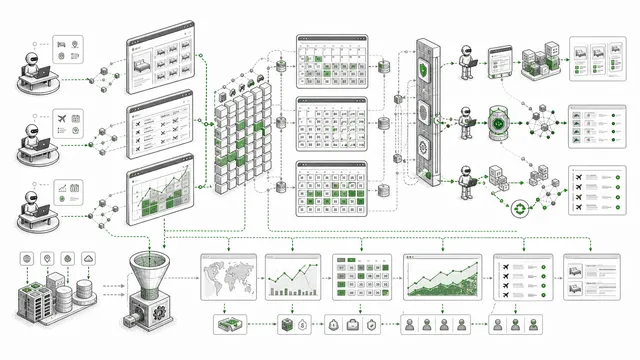

Travel-rate scraping is the most adversarial commercial scraping segment in 2026. Booking, Skyscanner, Hopper, Expedia, Airbnb, and the major airline direct-booking pages all run aggressive multi-vendor anti-bot stacks. The defenses are specifically tuned to detect scraping by competitors — the data has direct competitive value, and the targets invest in protecting it accordingly. Per-page scraping costs on these sites run 3-5× the cross-vertical median.
The Apify Store’s TRAVEL category — 1,019 actors with 40k monthly active users — sits atop this difficult underlying market. The category’s per-actor demand density (39.6 users per actor, second-highest after OPEN_SOURCE) reflects the fact that successful travel scrapers command premium pricing. The category’s actor count is moderate (1,062 catalog total) because the technical barrier to entry weeds out most casual publishers.
What makes travel scraping hard
Travel sites deploy unusually thick anti-bot infrastructure for four structural reasons.
Data has immediate competitive value. A live hotel rate or flight price is worth knowing because the asking party is likely to use it in a competing booking flow or a pricing comparison. The defenders know that the bulk of scraper traffic is operated by competitors (other booking sites, travel-data resellers, hedge funds running pricing arbitrage). The motivation to defend is correspondingly strong.
The data refreshes constantly. Hotel and flight inventory updates by the minute. A cached scrape from yesterday is worth almost nothing. Scrapers have to hit the live site, repeatedly, to maintain a useful dataset. The repeated-access pattern is easier to detect than one-off scraping.
The defenders are well-resourced. Booking.com (parent: Booking Holdings, around $25bn revenue) and Expedia (around $14bn revenue) can afford the most expensive anti-bot tooling. They run combinations of DataDome, Akamai, and HUMAN Security in layered configurations. Smaller competitors (Hopper, Skyscanner) inherit similar infrastructure through their CDN providers.
The legal posture is hostile. Travel sites have been particularly aggressive with cease-and-desist letters and ToS enforcement. The Ryanair v. PR Aviation line of European case law has established that even technically accessible price data can be protected against systematic scraping under contract law. The legal exposure for travel-data scraping is structurally higher than for, say, e-commerce product scraping.
The infrastructure that actually works
For an operator scraping Booking, Skyscanner, or Hopper at meaningful volume in 2026, the minimum viable infrastructure stack is significantly more expensive than the cross-segment baseline.
Residential proxy network (required). Datacenter IPs are blocked at the edge on most travel targets. Residential IPs are mandatory. Bright Data, Smartproxy/Decodo, and the secondary tier (NetNut, IPRoyal, Soax) all provide. Per-GB costs run $5-12 in the residential tier; travel-scraping bandwidth needs are large because page sizes are 200-500KB.
Browser-as-a-service or stealth browser (required for the hard targets). Pure HTTP scraping does not work against the JavaScript-heavy interfaces. Browserbase, Hyperbrowser, or custom Patchright deployments are the practical options. Session-hour costs run $0.05-0.25 per browser-session, multiplied by the per-page browser execution time.
Geographic distribution (required for accurate pricing). Travel rates differ by viewer’s geographic location. Scraping for accurate pricing requires distributing requests across the geographies the buyer cares about (typically a panel of 20-50 city-level locations). Each additional geography is additional residential-proxy cost.
Anti-detection rotation strategy (required). Static IP-rotation policies get fingerprinted. Production travel-scrapers rotate IPs, user-agents, screen sizes, browser versions, and timing patterns continuously. The orchestration overhead is significant.
The combined per-page cost on a top-tier travel target with all of the above runs in the $0.02-0.08 range — versus $0.001-0.005 for an undefended e-commerce site of similar page size. The 10-50× cost premium is what the defenders’ anti-bot investment forces.
How successful Apify TRAVEL actors monetize
The 1,019 TRAVEL actors in the Apify catalog include three sub-categories with different economics.
The high-end production scrapers. Apify actors that successfully scrape Booking, Skyscanner, or Airbnb at scale charge meaningfully more per record than the cross-category average. PPE prices in the $0.01-0.05 per record range are typical, reflecting the underlying infrastructure cost. The buyer is willing to pay because the alternative (build your own travel scraper from scratch) requires capital and engineering capacity that most buyers do not have.
The mid-tier “best effort” scrapers. Smaller operators that scrape the easier targets (Hopper, the long-tail aggregators) or that accept lower success rates on the harder targets (60-70% extracted vs the 95%+ that top-tier infrastructure achieves). Pricing in the $0.005-0.01 range. These actors capture buyers who do not need every data point but want a steady stream.
The legacy scrapers that no longer work. A meaningful share of TRAVEL category actors are zombies — written in 2023-2024, no longer functional against the current anti-bot stacks. These contribute to the 25% zombie rate and are functionally dead. The category-level zombie rate for TRAVEL (13.0%) is lower than average, but the zombies that exist are concentrated in actors written before the 2025 anti-bot infrastructure upgrades.
What this means for new entrants
The economic floor for entering travel scraping in 2026 is substantial.
A new publisher building a Booking-or-Skyscanner scraper needs:
- Access to a residential proxy network (Bright Data, Smartproxy/Decodo, or equivalent)
- A browser-as-a-service capability or a self-managed stealth browser stack
- Continuous engineering capacity to maintain selectors against frequent layout changes
- Legal posture (terms-of-service review, geographic compliance documentation)
The capital and ongoing operational requirements are not compatible with the long-tail solo-developer model that dominates the rest of the Apify Store. Travel scraping is, by infrastructure economics, a segment for committed operators only.
The buyer-facing reality is correspondingly different. A travel-scraping buyer cannot reasonably expect to find a $20/month subscription that delivers reliable Booking data. The successful publishers in this segment charge enterprise-grade prices because their costs are enterprise-grade. The hobbyist tier has been priced out.
The longer-term trajectory points at further concentration in the segment. As anti-bot defenses get more expensive to bypass and as the legal exposure stays high, the operators who can sustain the segment continue to consolidate. By Q4 2026, expect the TRAVEL category to be roughly 1.3-1.5× its current actor count but with even sharper concentration of demand on the top 5-10 actors. The segment looks more like the Pareto-of-Pareto distribution sharpened — even fewer winners, even harder entry.
Sources
- Apify TRAVEL category — 1,019 actors, 40,193 MAU (Q2 2026 pulse data)
- Booking Holdings 10-K filings
- Expedia 10-K filings
- Signal Census: HUMAN Device-Graph Anti-Bot Architecture
- Signal Census: Stealth Is Dead 2026
- Signal Census: Apify Category Growth Race — TRAVEL density context